Mamdani Between Global Celebration and Local Challenges
بقلم: Rakad Al Hadid
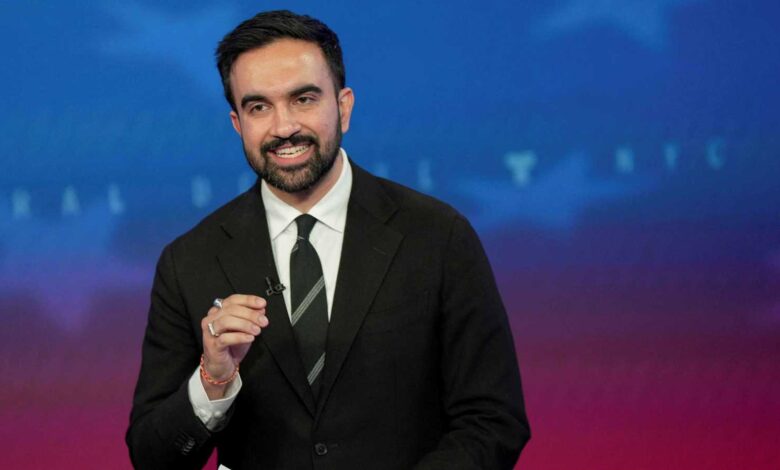
What Awaits Him in New York?
After his historic win as Mayor of New York City, Zouhran Mamdani has become the focus of global attention—not only in the United States but also in the Arab and Muslim world. Reactions went beyond traditional congratulations, opening discussions about the symbolism of this victory and its implications for Muslims in the West.
While some viewed his win as a historic moment that reshapes political representation, others saw it as a difficult test for a man who will lead one of the most politically and economically complex cities, surrounded by great hopes and even greater challenges.
Celebration and Striking Political Symbolism
Arab media headlines celebrated the arrival of a progressive Muslim immigrant to the mayoral seat of one of the world’s most important cities. Observers considered this victory not just a local achievement but a symbolic milestone, representing Muslims’ transition from the margins of Western politics to its core.
A broad segment of Arabs and Muslims see Mamdani as the “voice of the marginalized” and the “advocate for the oppressed,” especially due to his pro-justice stance on Palestine. Some described him as a model politician who combines social justice, immigrant experience, and solidarity with global causes.
Strong Response from Pro-Palestinian Circles
In media outlets affiliated with the Islamic movement or supportive of the Palestinian cause, his victory appeared as a “moral triumph” and a political message to the West.
Some analysts suggested that his success could contribute to reshaping the American political narrative toward the Middle East, even if his influence is limited at the local level, while others argued that its symbolism extends beyond New York.
Criticism and Reservations: Symbolism Is Not Enough
Despite the celebrations, Arab analyses carried a realistic tone: “The victory is symbolic… but radical change in the American political system is not within any one individual’s reach.”
Some pointed to his positions on Israel, considering them politically pragmatic, which sparked discussion about the depth of his stances.
Concerns Over Islamophobia
Arab and Islamic media covered the scope of the online attacks targeting Mamdani immediately after the results were announced.
Researchers documented thousands of posts weaponizing his religion politically, prompting American and Arab Muslim organizations to denounce what they called “the normalization of hostility toward Muslims in the public sphere.” This wave is not new, but it is now being tested against New York’s first Muslim mayor.
Identity: A Bridge Between East and West
For many in the Arab and Muslim worlds, Mamdani represents the identity of the Muslim diaspora: a Muslim, immigrant, of mixed South Asian origins, achieving a political breakthrough in one of the world’s most complex governing environments. This combination made him a symbol for a new generation of Muslims carving paths to influence in the West.
Mamdani in New York: Ambitious Agenda and Clash With a Complex Reality
As his term begins, Mamdani faces a complex web of financial, political, and administrative pressures, confronting a real test of turning his progressive vision into tangible reality.
Cost of Implementing Promises
Projects like universal childhood programs, free public transportation, raising the minimum wage, and creating city-owned grocery stores carry a heavy price on New York’s budget. Mamdani bets on increasing taxes on the wealthy and large corporations, which could spark clashes with the business community and moderate political forces, requiring close cooperation with the state governor and the legislature in Albany.
Complex Financial Reality
New York operates on a budget exceeding $116 billion, weighed down by high salaries, accumulated debt, and massive service obligations. With potential reductions in federal support and weak job growth, any reforms become costly, limiting the new administration’s maneuvering room.
Bureaucracy and Legislative Challenges
Managing a city like New York requires navigating a sprawling administrative system, strong unions, and multiple agencies capable of slowing down changes. The city council is also diverse, with some members likely opposing police budget reallocations or the creation of new community safety departments. Mamdani must build strong alliances within and outside the Democratic Party to ensure sufficient legislative support.
Public Expectations and Media Pressure
His campaign slogan, “Agenda of Abundance,” created popular optimism for rapid and radical reforms. Any delays—due to financial or legislative obstacles—could quickly turn into disappointment amid intense media scrutiny.
Relations With State and Federal Government
Many of his policies require higher-level approvals and could be affected by political disagreements or federal funding changes. Some business leaders are cautious about tax hikes or expanding government roles in certain areas.
The Path Is Fraught With Political and Social Confrontations
His progressive and democratic socialist background makes him a target for ideological attacks, while he must balance reforms with maintaining essential city services.
Executive Experience Challenge
Despite his legislative experience, managing a city of New York’s size requires different executive skills, making the formation of a strong, experienced administrative team essential for his success.
City Safety
Police reform projects, including establishing a community safety department, may face resistance from law enforcement institutions and residents. Mamdani will need to balance security requirements with social justice.
Conclusion
Reactions in the Arab and Muslim world range from loud celebration to realistic assessment and concern about racist attacks. Meanwhile, Mamdani faces a harsh reality in New York, with debt, bureaucracy, political pressures, and massive public expectations. Yet, his victory has transcended New York, becoming part of a global conversation about Muslims’ place in Western politics and the potential to turn symbolism into real change.
The greatest challenge remains turning this momentum into tangible policies in a city that is unforgiving but—at times—offers the chance to make history.